Brush Off: Don't Let a Notification Break the Conversation
We're addicted to our phones. Every buzz, every glow pulls us out of the conversation we're actually in. This was a study to find out if there was a better way.
What I did: UX Researcher, Programmer, Circuit Designer
Timeline: May 2017
Type: Academic Research Study, Hardware Prototype
Here's the problem
Wearables were supposed to fix our phone addiction. The pitch was simple: move notifications to your wrist so you stop pulling out your phone every five minutes. Face up, not heads down.
It didn't really work. Smartwatches just moved the interruption. You're still breaking eye contact. You're still pulling attention away from the person in front of you. The notification wins every time.
Here's the thing about notification design -- nobody was asking whether the feedback modality itself was the problem. Vibration is disruptive by nature. It demands immediate attention. We wanted to know if light could do the job without the rudeness.
The concept
Instead of buzzing your wrist, what if a soft light glowed under your sleeve?
The idea: an inconspicuous wearable worn under clothing that notifies you through indirect light rather than vibration. Subtle enough that the person across from you doesn't notice. Visible enough that you do.
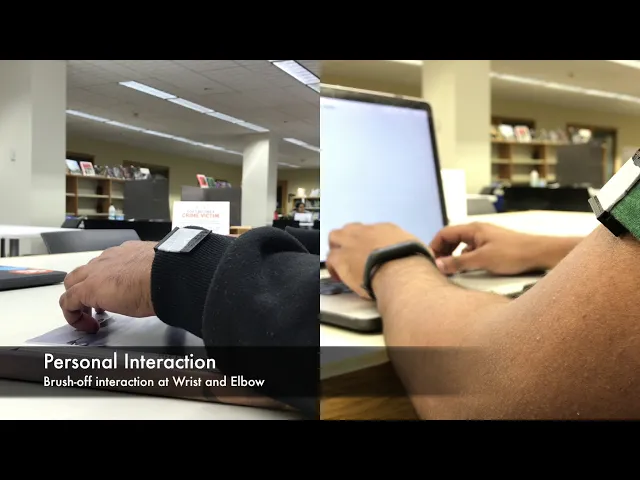
And to interact with it, we designed a new gesture -- the "brush off." Brushing dust off your clothes is one of the most natural, invisible movements a person makes. Nobody looks twice at it. That's exactly why it works as a dismissal gesture. The interaction hides in plain sight.
Building the prototype
This wasn't a design exercise. We actually built it.
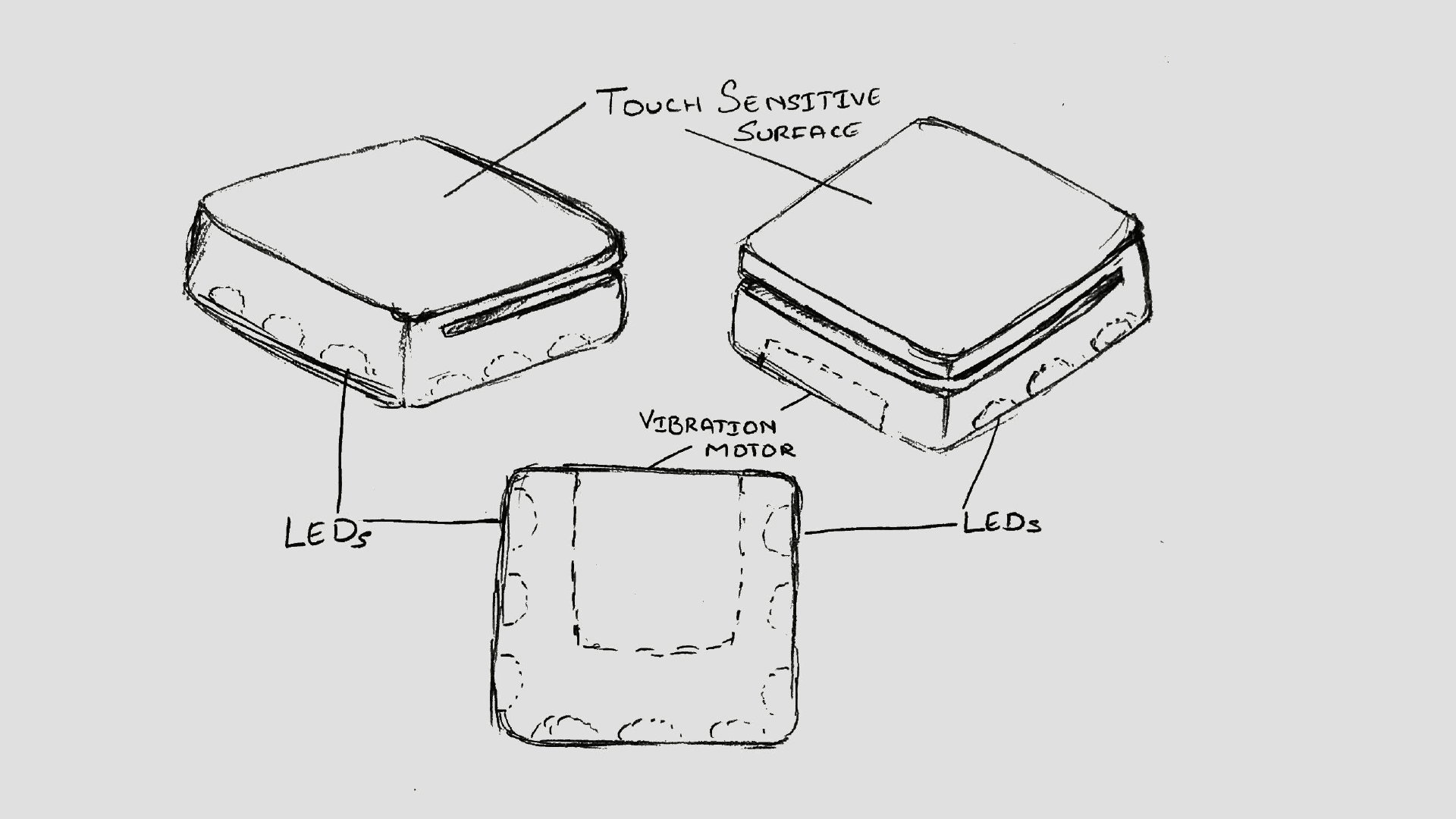
The core challenge was connectivity. We needed a system that could receive signals wirelessly, trigger LEDs or a vibration motor, and be small enough to wear. We landed on Particle.io's Photon -- a lightweight Wi-Fi module that could receive signals over Wi-Fi and trigger the prototype remotely during testing.
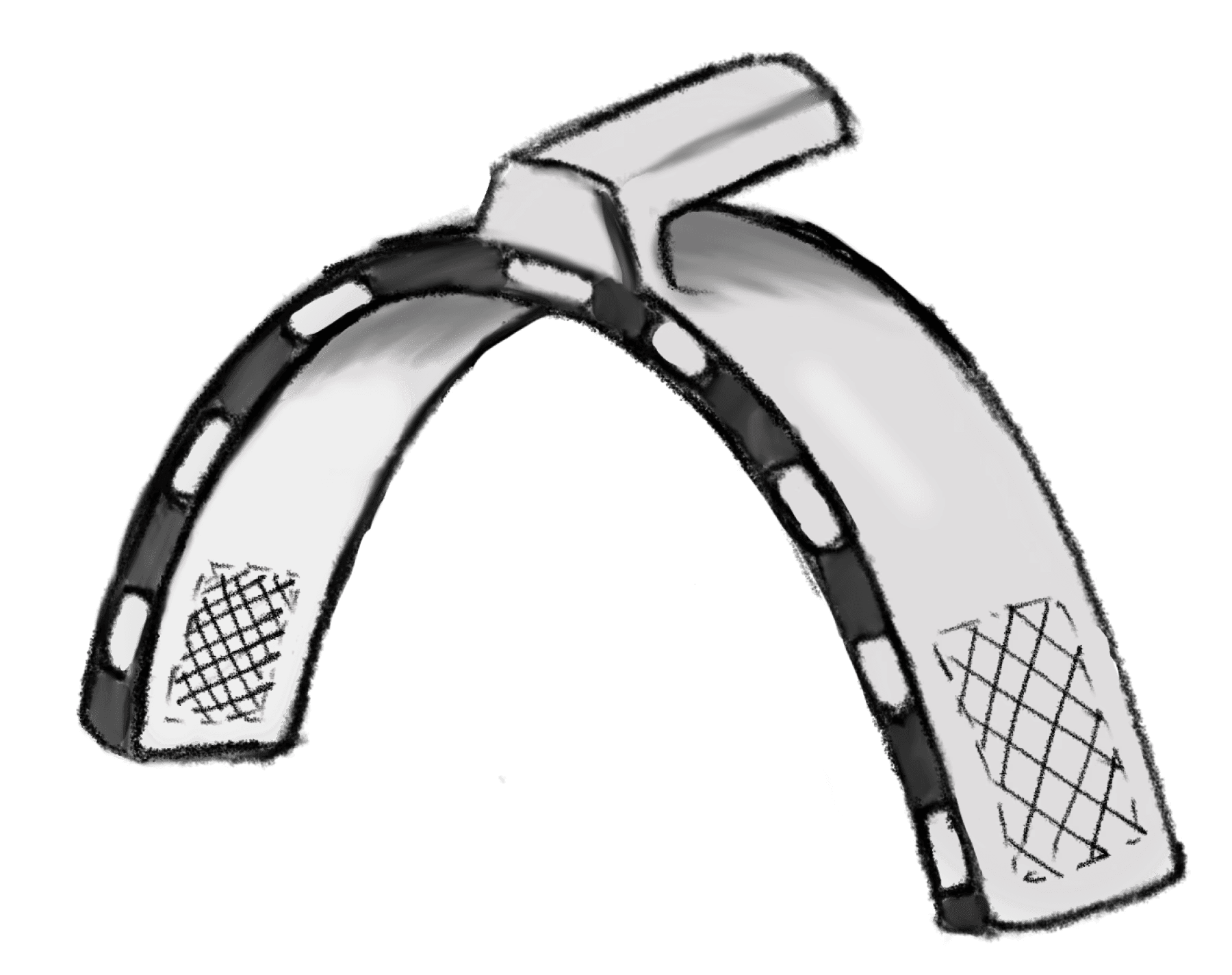
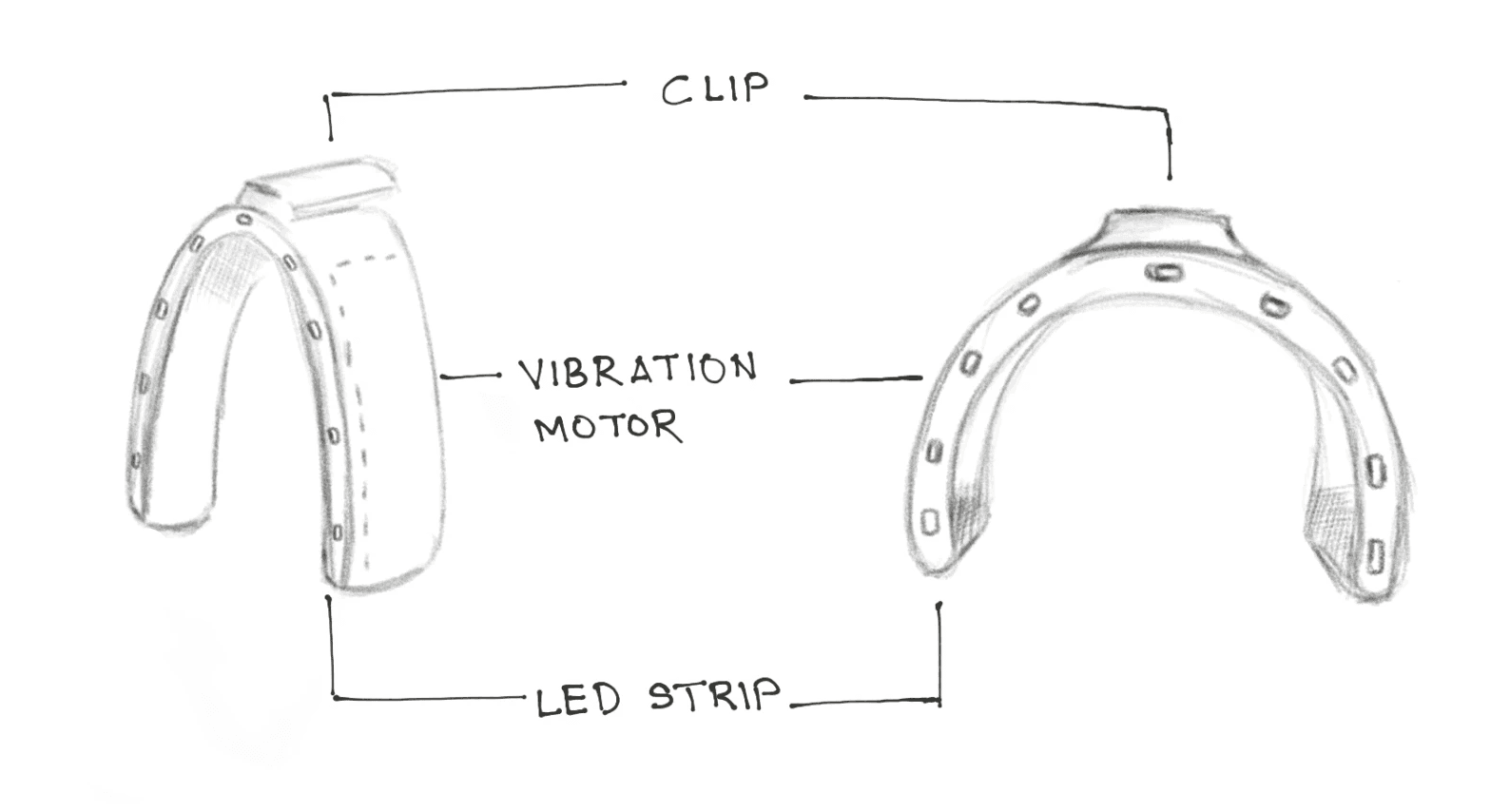
The housing went through several iterations. The final version used a slide-in clip design so it could attach to a sleeve without being obvious. Battery and Photon lived in a 3D-printed housing clipped onto a faux sleeve. Everything else – the LEDs and vibration motor –was sewn directly into the sleeve, in contact with the user's skin.
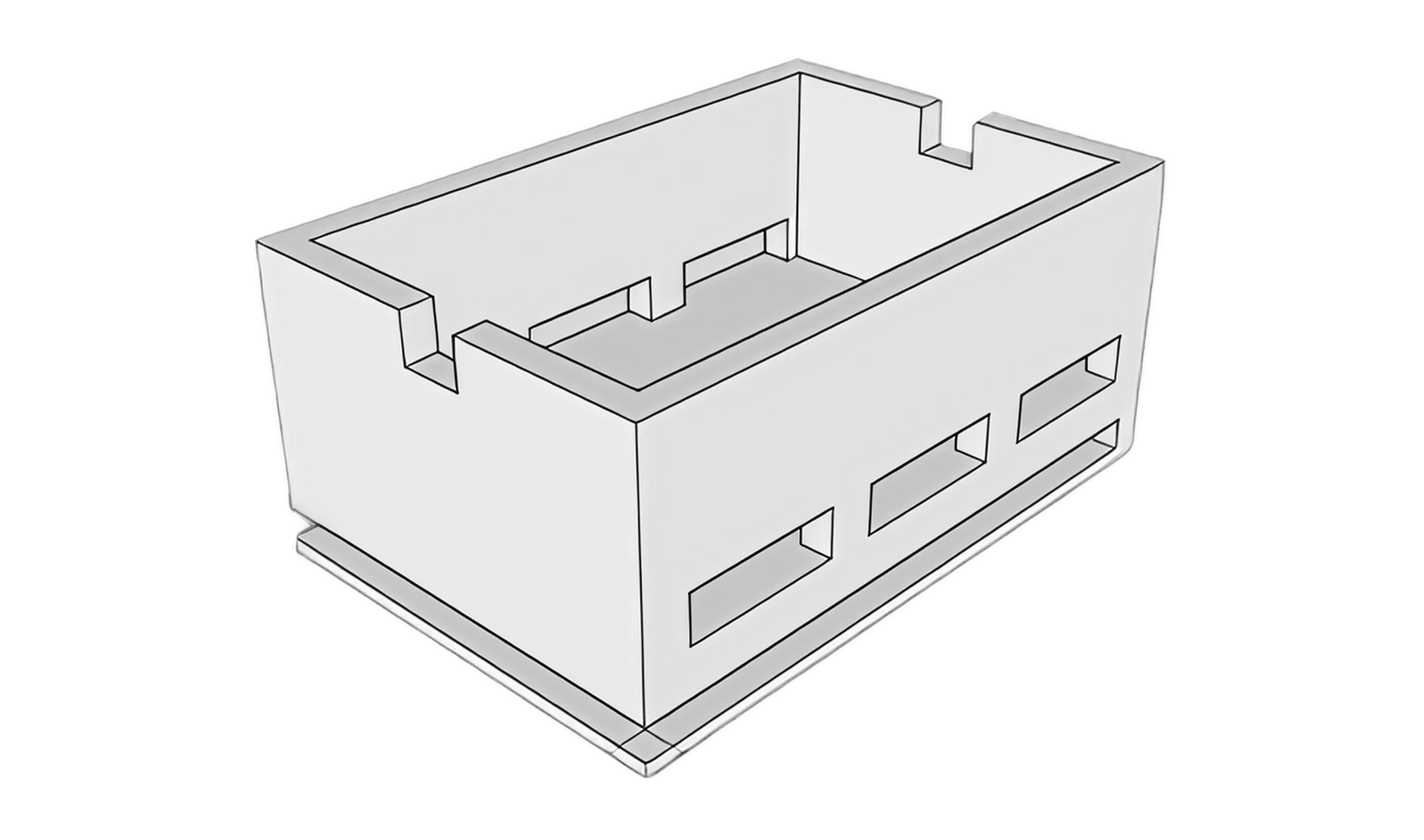
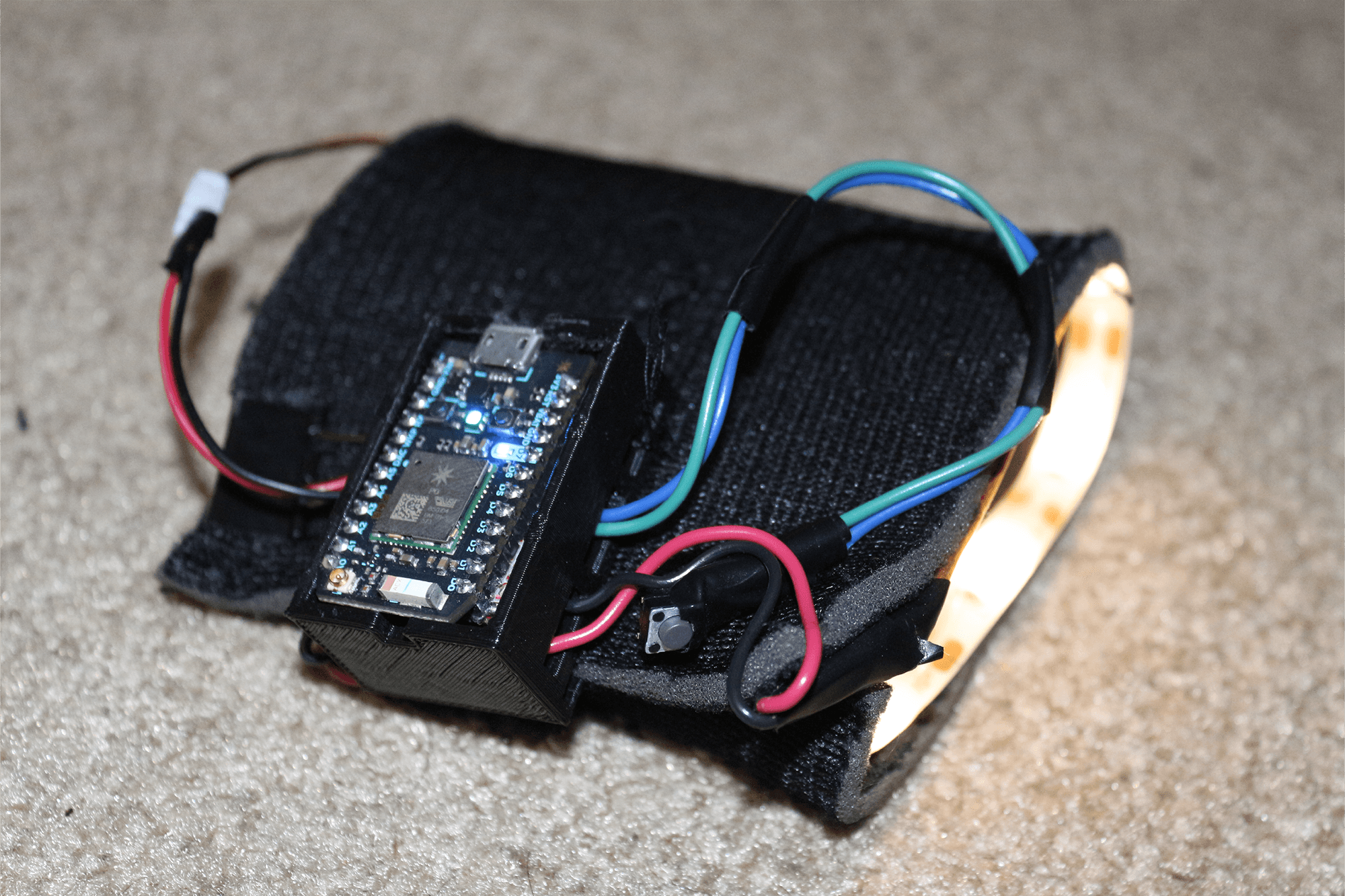
The housing ended up larger than we wanted. The Photon just isn't small. A custom PCB with only the required components would fix that – but that was out of scope for this study.
The sleeve itself was worn under clothing. LEDs sat at the edge, facing inward toward the skin. A push-button on the outside let users dismiss feedback. The long-term vision was conductive fibers woven into actual clothing, making the button gesture seamless. For now, the button simulated it.
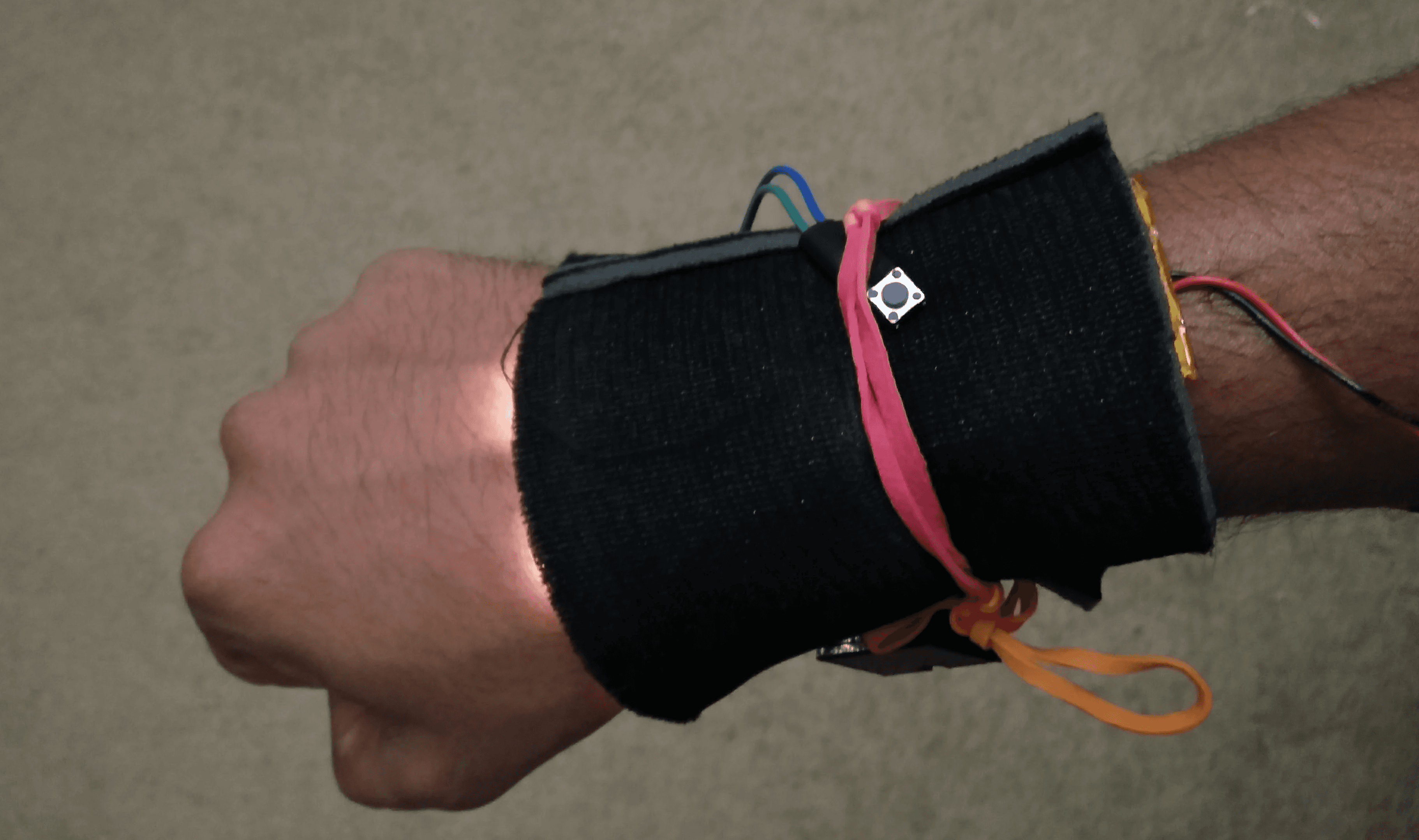
Not pretty. But functional enough to test the real question.
The study
We ran a two-phase study at RIT – in the library and the campus cafe. 16 participants, ages 20-27, 9 female and 7 male.
Phase 1: observer perspective
The moderator wore the prototype under a full-sleeved shirt and had a normal conversation with each participant. A separate observer cycled through six signals remotely -- three vibration, three light -- while watching the participant's reactions. Participants didn't know the prototype was there.
Phase 2: user perspective
Participants put the prototype on themselves, at two locations: the wrist and the upper arm. With it on the wrist, they drew shapes. With it on the upper arm, they read and summarized a book passage. They were asked to dismiss feedback as soon as they noticed it, without actively watching for it.
What we found
The results were interesting. And a little humbling.
87.5% of participants in Phase 1 -- 14 out of 16 -- didn't notice the light glowing under the moderator's sleeve. Nobody detected the vibration either. So from a social invisibility standpoint, both modalities performed well. The prototype was doing its job of staying hidden.
But in Phase 2, when participants wore it themselves, 10 out of 16 said vibration felt more effective in public than light. The well-lit testing environment probably worked against us -- subtle light feedback is harder to notice when you're not in a dimly lit space.
Half the participants already believed vibration was disruptive before the study even started. That bias was real and worth noting.
The thing that stood out most: participants ranked emails and missed calls as high priority, social media and IM as low. Notification hierarchy matters just as much as the modality itself. That's a different study, but it's the right follow-up question.
What went wrong
Honestly, a few things.
The prototype was bulky. Participants noticed. A wearable that's supposed to be invisible has a credibility problem when it feels like wearing a brick under your sleeve.
The faux sleeve didn't stay in place the way we intended. It was meant to clip on, but in practice it wrapped around the arm and needed to be held. Small thing, but it introduced noise into the study.
And testing in a bright library probably wasn't the right call for evaluating light-based feedback. The environment worked against one of the two things we were trying to measure.
What I learned
Three things stuck with me from this project.
Building the actual hardware changed how I think about prototyping. Working with the Photon, designing circuits, iterating on the housing in Fusion 360 and SketchUp -- it made the constraints real in a way that software prototyping doesn't. You can't fake a bulk problem in a mockup.
This was also the first time I had to seriously delegate. Researcher, programmer, and circuit designer weren't three roles I could all own equally. Recognizing that early -- and actually acting on it -- made the project work.
And the brush-off gesture itself is still the part I'm proudest of. It's a small idea with real elegance: hide the interaction in a movement people already make. That principle shows up in a lot of good design, whether it's hardware or software.
The best interaction is the one nobody notices.
Tools: Arduino, Fusion 360, Google SketchUp, 3D Printing